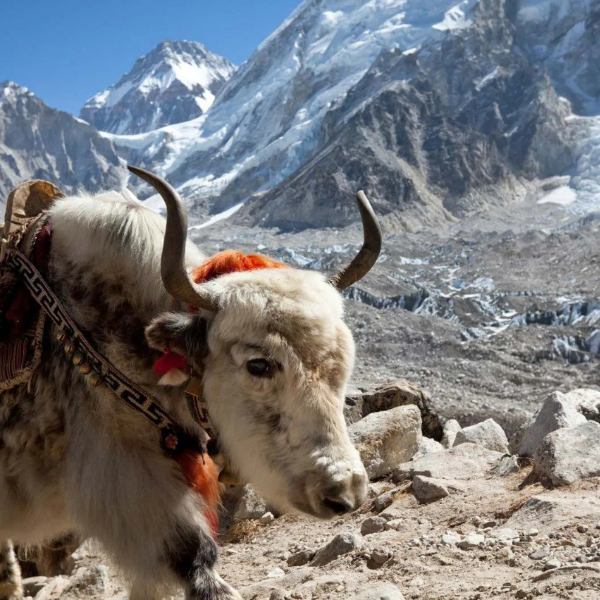
Meet Tatty and her friends
Yaks: The High-Altitude Giants of the Himalayas
Yaks are large, shaggy mammals that have been central to Himalayan cultures for centuries. They provide transportation, fuel, food, and raw materials for clothing and shelter, making them indispensable to nomadic communities.
Adapted to some of the harshest environments on Earth, yaks thrive in freezing high-altitude conditions but struggle in warmer, lowland climates.
While domesticated yaks remain vital to human life in the Himalayas, wild yak populations are now considered vulnerable.
Physiological Adaptations
Yaks are remarkably well-adapted to extreme
mountain environments:
Thick Fur – A dense, shaggy coat insulates them against subzero temperatures and fierce winds.
Large Lungs & Heart – Their enlarged lungs and strong hearts help absorb and circulate oxygen efficiently in thin mountain air. Oxygen-Rich Blood – Yaks retain foetal haemoglobin into adulthood, giving their blood an exceptional oxygen-carrying capacity.
Insulating Fat Layer – A thick subcutaneous fat
layer shields them further from the cold.
Minimal Sweating – Almost no functional sweat glands prevent heat loss, though this makes them poorly suited to warm environments.
Habitat & Range
Wild yaks are native to Tibet and the Himalayas.
High-Altitude Specialists – They inhabit elevations where temperatures can plummet to –40°C (–40°F).
Wild vs. Domesticated – While wild yaks are listed as Vulnerable and declining, domesticated yaks are widespread across Tibet, Nepal, and other Asian highlands.
Behaviour
Herbivores – Yaks graze on grasses, sedges, and
alpine plants.
Herd Living – Females and calves form herds,
while adult males may live alone or in bachelor
groups.
Sure-Footed Travelers – They are strong climbers, able to navigate rocky terrain, ford rivers, and move easily through snow.